Originally posted on VK: 20.07.2026
We continue our introduction to how birch plywood is made.
After acceptance and sorting, veneer logs move to the next important stage: hot-water conditioning.
Why is this necessary?
Birch is a dense wood. If peeling starts straight away, the veneer may be uneven, torn or cracked. Before further processing, the logs are therefore held in hot-water pools.
During conditioning, the wood:
• becomes more pliable;
• warms evenly through its full thickness;
• releases internal stresses;
• becomes easier to process.
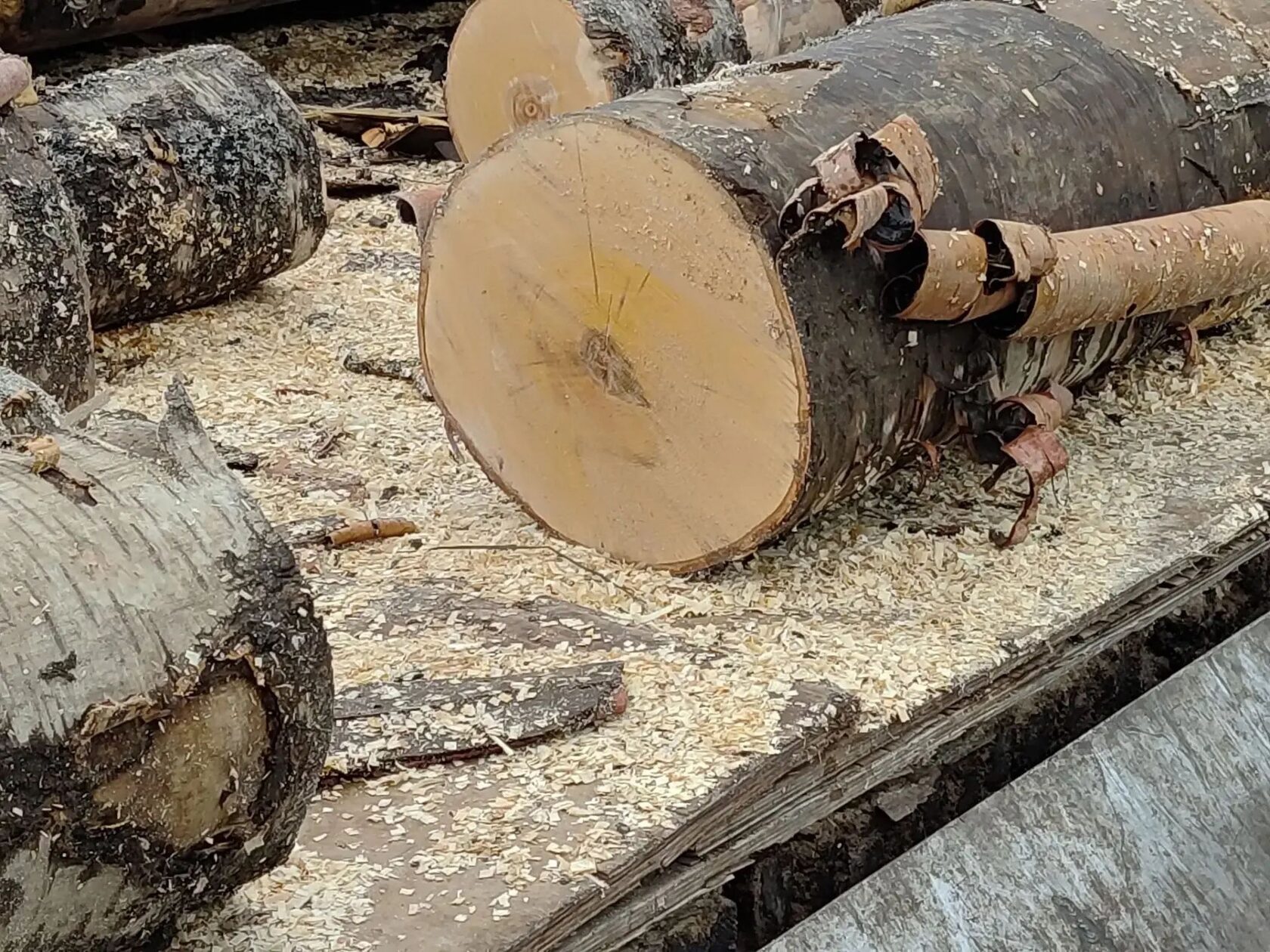
The prepared logs are then cross-cut into billets of the required length. These are sent to veneer lathes to produce thin birch veneer.
At first glance, hot-water conditioning may seem a simple process, but it largely determines the quality of the future veneer and, consequently, of the finished plywood.
In the next instalment, we will show how a birch billet becomes a very thin sheet of wood: birch veneer.